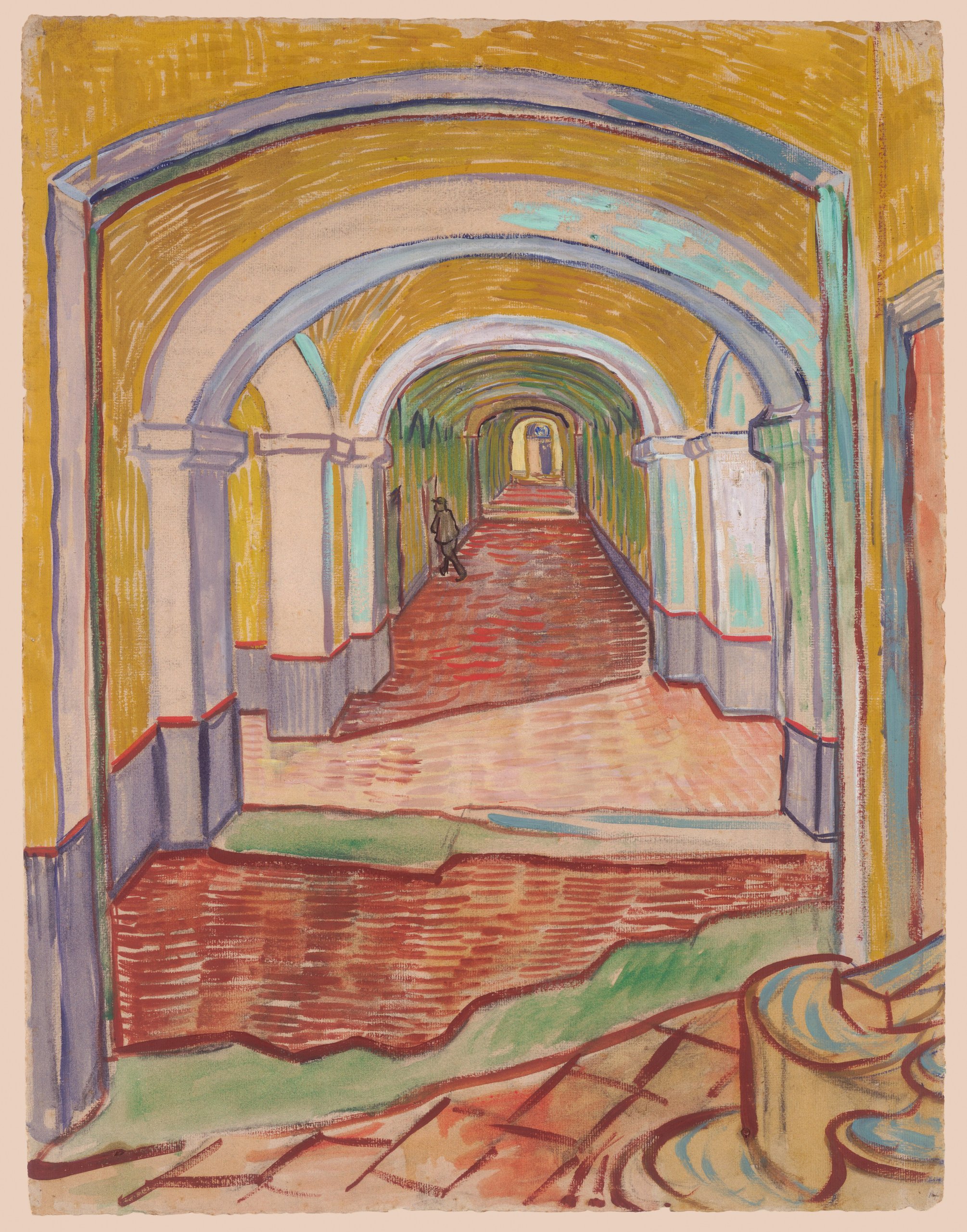
Corridor in the Asylum by Vincent van Gogh, a long institutional corridor of arches and closed doors with one small figure walking away down it
Momentum Issue 06 · The Threshold Collective

The Year Nothing Changes

On the distance between a law and a ward

A bill became an Act in December 2025 and the country moved on. The ward it was written for will not feel it until 2027 at the earliest. This is what happens in the meantime, and to whom. With every figure sourced.

Van Gogh · 1889

From the editor

A law is not a room.

The Act that decides when a person can be taken into hospital against their will, and what may be done to them once they are there, was rewritten in December 2025.

The announcement carried the word revolutionising. What it did not carry was a date.

That was nine months ago. Almost none of it is in force.

Royal Assent is a ceremony. It changes the statute book. It does not change the threshold a doctor applies on a Tuesday afternoon, or the number of beds on the ward that afternoon, or which people find themselves detained more often than everyone else. Those change later, when the Act is commenced section by section, after regulations are laid, a new Code of Practice is written, and a workforce with no spare hours is trained to work differently.

The government has been honest about this in documents almost nobody reads. The first set of major reforms is indicative for 2027/28, and the department estimates full implementation at around ten years.

So there is a year in between, and the year belongs to somebody. It belongs to whoever is detained this month, under the rules the country has already agreed are wrong, and to the family sitting in a corridor being told that the ward is full and the nearest bed is a long way away.

This company was started by people who met inside that system. We are not neutral about it. We are careful with numbers, though, and every figure in this issue is sourced, dated and named. Where a number could not be traced to the body that published it, it is not here, and the last page says what was left out.

What this issue is not. It is not a complaint about the Act. Much of what it does is right, and people worked for years to get it. It is about the gap between the day a law passes and the day it arrives, and about who is asked to wait in that gap.

01 · The ceremony

A law passed in December 2025 and nothing in the ward moved.

There are two dates in the life of any Act. The day it is passed, which is announced, and the day it starts to apply, which usually is not.

18 December 2025

The day the Mental Health Act 2025 received Royal Assent. Nine months ago. The announcement that day carried the word revolutionising.

Mental Health Act 2025 c. 33, Royal Assent recorded on the face of the Act, legislation.gov.uk. Department of Health and Social Care, Mental Health Bill receives Royal Assent, 18 December 2025.

Between those two dates sits the ordinary machinery of government. Regulations have to be drafted and laid before Parliament. A Code of Practice, the document that tells clinicians what the words actually require of them, has to be rewritten and consulted on. Trusts have to change forms, systems and training. None of this is scandalous. All of it takes time, and the time is measured in years.

Around ten years

The government's own estimate of how long full implementation will take. The first major reforms, the new detention criteria among them, are indicative for 2027/28. The regulator says the same: a ten year period.

Department of Health and Social Care, Mental Health Bill: Implementation Policy Paper, deposited paper DEP2025-0184. Care Quality Commission, Monitoring the Mental Health Act in 2024/25, published 29 January 2026.

  • 18 December 2025, Royal Assent Five sections come into force. All five are machinery: consequential powers, extent, commencement, the short title. Nothing that touches a patient.
  • 18 February 2026, automatic A small group of sections, commenced two months after Royal Assent without any regulations. Most concern restricted patients: conditional discharge on conditions that amount to a deprivation of liberty, tribunal applications and references for conditionally discharged patients, and transfer directions for people remanded to youth detention. The conditions for moving a prisoner to hospital are not among them.
  • 6 April 2026, by regulations Two sections. The Human Rights Act is extended to certain private care providers, and the Secretary of State is required to review the rules on notifying the regulator when someone under 18 is admitted.
  • Still not in force The principles. The detention threshold. Community treatment orders. The learning disability and autism provisions. Care and treatment plans. The nominated person. Detention periods. Advocacy. Advance choice documents. After-care. Places of safety. Sections 1 to 29 and 40 to 50, all three Schedules, and most of sections 30 to 39 as well.

The effect is simple and it is rarely said out loud. A person detained today is detained under the old Act. The clinician deciding is applying the old test. The family arguing is arguing with the old rules about who they are allowed to be. The reform exists, in the sense that it is printed. It does not yet exist in the only place that matters, which is the room.

The Code of Practice matters as much as the Act, because it is the document that tells a clinician what the words require on a Tuesday. The government's own paper puts it at least a year from Royal Assent. The Code in force today was written in 2015.

One more thing readers deserve, because it is rarely said. Almost all of this Act is for England and Wales. A handful of sections run across the whole United Kingdom, including the one extending the Human Rights Act to private care providers, and one runs in England alone. Scotland and Northern Ireland have their own law, and their own delays.

This is not an accusation of bad faith. It is a description of how commencement works, and an argument that the interval deserves attention rather than applause.

Royal Assent is a ceremony. It changes the statute book. It does not change the threshold a doctor applies on a Tuesday afternoon.

Issue 06 · From the editor

02 · The threshold

The test that detained someone last week is still the test.

The new Act raises the bar for detention. Until it is commenced, the old bar is the one in use, and it is being used a great deal.

It is worth knowing what the new bar says, because the version people quote is not the one that passed. The review that led to the Act proposed detention only where there was a substantial likelihood of significant harm. What the Act says is that serious harm may be caused unless the patient receives treatment, and that treatment is necessary given the nature, degree and likelihood of that harm. That is a real tightening. It is also softer than the sentence most people have been told, and it is not yet law in practice.

52,731

New detentions recorded in England in 2024-25. Read it as a floor and not a total. The same publication says counts are incomplete at national level and lower than the true figures. The state does not know how many people it detains.

NHS England Digital, Mental Health Act Statistics, Annual Figures, 2024-25, published 18 September 2025, chapters Detentions and Data quality.

Up 0.5 per cent, or down 4.9 per cent

Two numbers for one year, in one publication. The headline compares everybody who submitted data. The like for like comparison, limited to the providers who submitted good quality data in every year from 2015-16 to 2024-25, shows a fall. Both are published, and the publisher says the headline does not represent the true change.

NHS England Digital, Mental Health Act Statistics, Annual Figures, 2024-25, published 18 September 2025, chapter Detentions.

Numbers on this scale stop meaning anything, so hold one of them still. Every one of those detentions is a day that began normally for somebody and ended with a decision made about them rather than with them. Whatever else is true, they are not statistics to themselves.

15 October 2026

The date the next annual detention figures are published. Until then no annual national figure covers any period after the Act passed. The year everybody called reform is, statistically, still empty.

NHS England Digital, Mental Health Act Statistics, Annual Figures, 2025-26, listed as an upcoming publication.

The point is not that detention is always wrong. Sometimes it is the only thing left that keeps a person alive, and the people who carry that decision carry it badly. The point is that the country has decided, in law, that the current test is too loose, and has then set the date for fixing it a long way off.

03 · The disparity

The gap is not new, and neither is the number.

The clearest finding in this whole area is also the oldest. Detention does not fall evenly, and it has not fallen evenly for as long as anyone has measured it.

262.4 against 65.8

Detentions per 100,000 people in 2024-25: the Black or Black British group against the White group, which is nearly four times the rate. The regulator, reading the same data, renders it as four times.

NHS England Digital, Mental Health Act Statistics, Annual Figures, 2024-25, published 18 September 2025, chapter Detentions: differences between groups of people. Care Quality Commission, Monitoring the Mental Health Act in 2024/25, published 29 January 2026, chapter Inequalities.

Over eight and a half times

Community treatment order use in 2024-25: 61.3 uses per 100,000 people in the Black or Black British group, against 7.5 in the White group. The review that produced this Act reported over eight times in 2018. The two figures are measured differently and nobody publishes a like for like series across the years, which is an answer of its own. There were 6,575 new orders in the year.

NHS England Digital, Mental Health Act Statistics, Annual Figures, 2024-25, published 18 September 2025, chapter Community treatment orders. Independent Review of the Mental Health Act, final report, 2018.

26 per cent

The rise in community treatment order use among people of Black or Black British ethnicity between 2023/24 and 2024/25, recorded by the regulator for the year in which the Bill was introduced to Parliament. We do not claim a trend across the years, because the 2018 measure and the current one are not the same measure. We can say what the most recent year did.

Care Quality Commission, Monitoring the Mental Health Act in 2024/25, published 29 January 2026, chapter Inequalities.

That is the part worth sitting with. A disparity can be named in a review, written into a Bill, debated in both Houses and printed in an Act, and still widen while all of that is happening, because none of it has reached the room where the decision is made.

A review commissioned by the government said this plainly years ago. The Act that followed carries measures aimed at it. Those measures are among the ones that wait for commencement, which means the disparity has been named, legislated against, and left running.

1,025 of 2,125

People with a learning disability and autistic people in mental health hospitals at the end of August 2026, and how many of them have been in hospital more than two years. That is 48 per cent. The proposed section 3 reforms for this group will not be commenced, in the department's own words, until there are sufficiently strong community services in place. That is a commencement with no date attached to it at all.

NHS England Digital, Statistics on people with a learning disability and autistic people in mental health hospitals, published 17 September 2026. Department of Health and Social Care, deposited paper DEP2025-0184.

Why this matters more than any other figure in the issue. A system can be short of money and still be fair. This is a system that is short of money and is also, by its own regulator's measurement, harder on some people than on others. The second thing is not fixed by fixing the first.

The disparity has been named, legislated against, and left running.

Issue 06 · The disparity
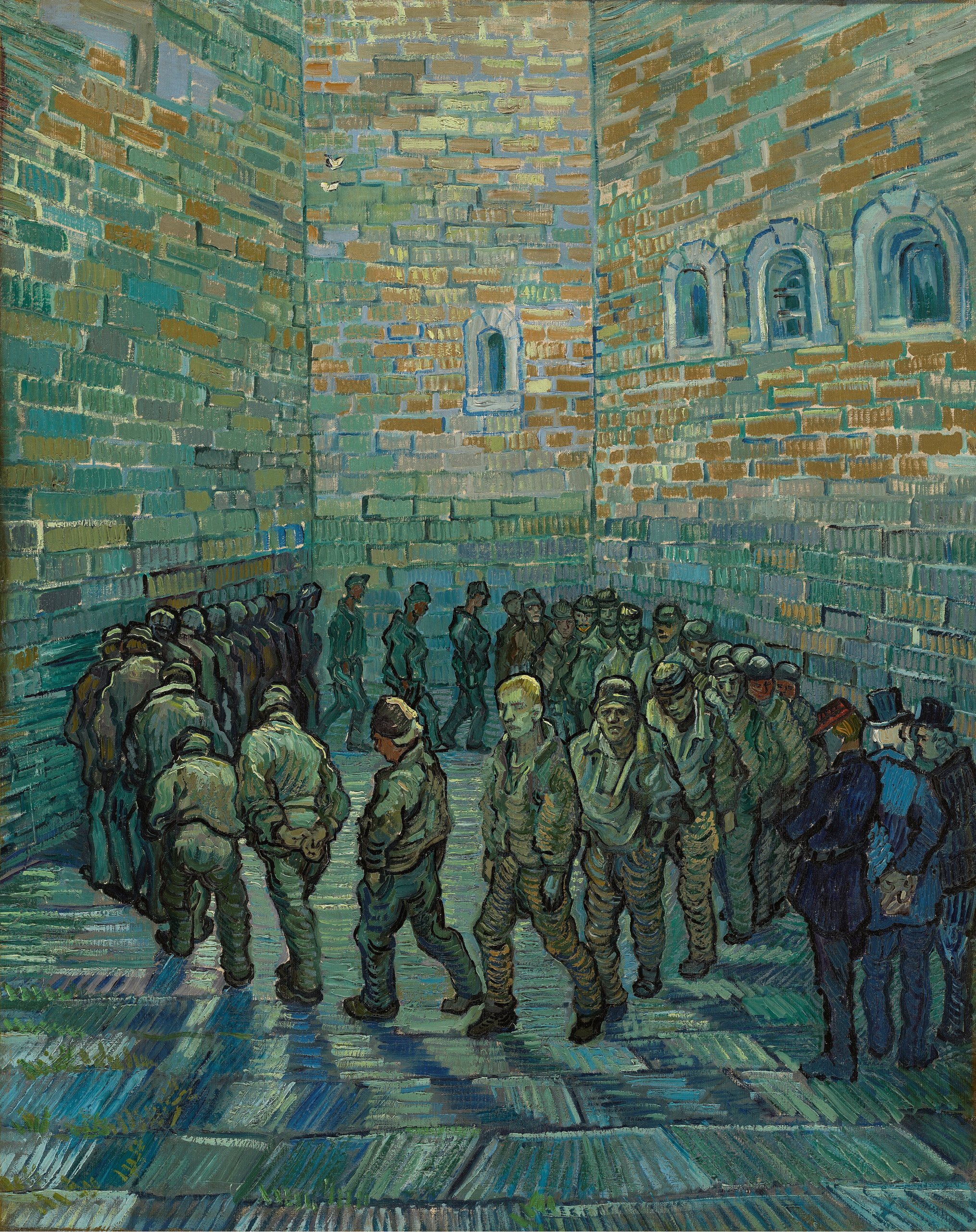
The Prison Courtyard by Vincent van Gogh, men walking in a slow ring inside high brick walls

“What cannot man live through! Man is a creature that can get accustomed to anything, and I think that is the best definition of him.”

Dostoevsky · The House of the Dead · 1862
The Prison Courtyard, Vincent van Gogh, 1890. Public domain. He painted it after Gustave Dore while he was himself a patient at the asylum in Saint Remy, copying a picture of men walking a ring they cannot leave.
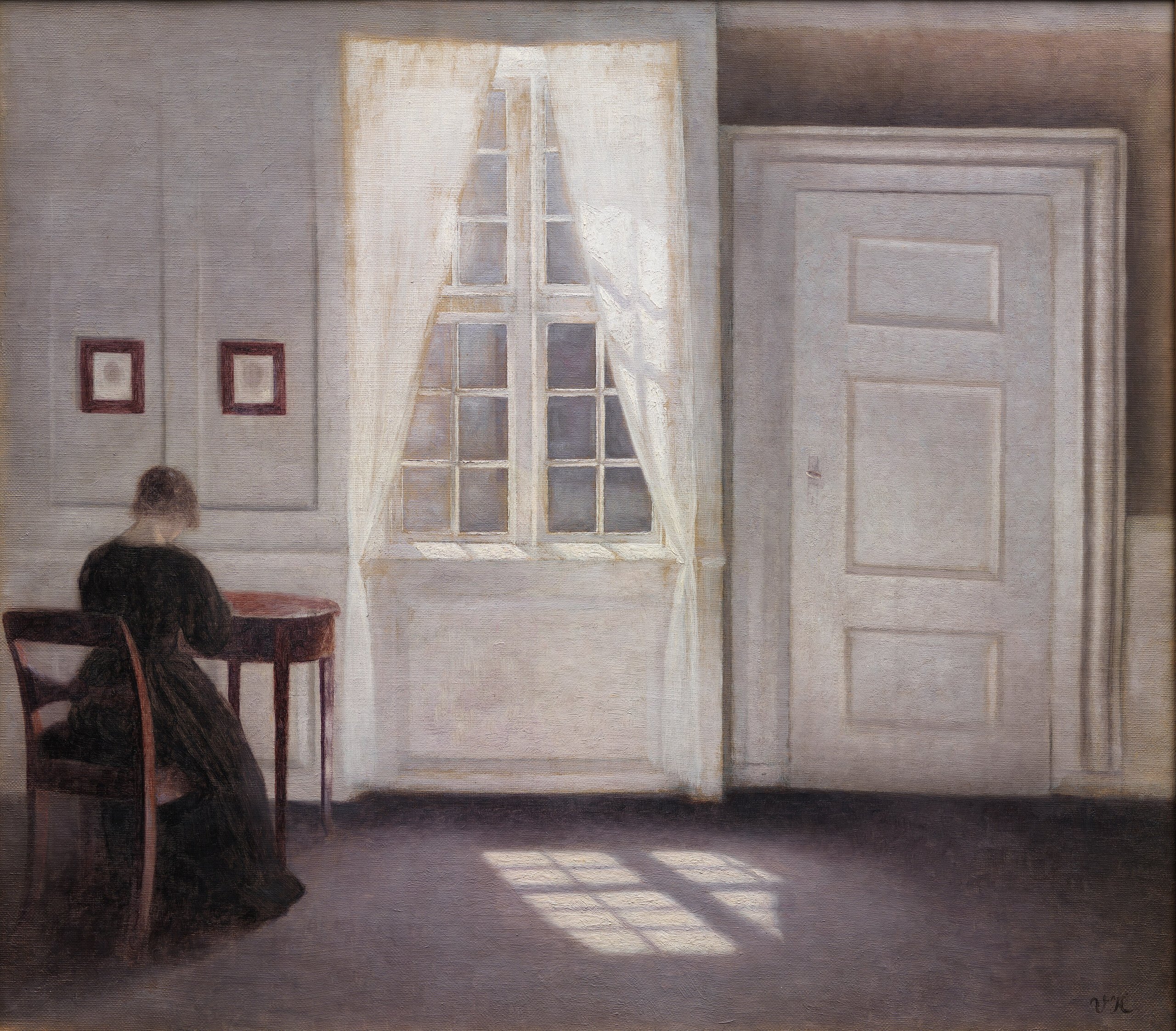
Interior in Strandgade by Vilhelm Hammershoi, a woman with her back turned, a shut door, and window light laid in bars across an empty floor

“Speaking generally, punishment hardens and numbs, it produces concentration, it sharpens the consciousness of alienation, it strengthens the power of resistance.”

Nietzsche · The Genealogy of Morals · 1887
Interior in Strandgade, Sunlight on the Floor, Vilhelm Hammershoi, 1901. Public domain. A shut door, a person turned away, and a window laying its bars across an empty floor.

04 · The estate

An Act cannot conjure a bed or a nurse.

Every promise in the new law has to be delivered by somebody, in a building, on a shift. That is where a rewritten statute meets what actually exists.

90 per cent

Average occupancy of mental health beds in England in 2024/25, against a recommended ceiling of 85 per cent. A ward run at ninety has no room left to be wrong about who needs a bed tonight.

Care Quality Commission, Monitoring the Mental Health Act in 2024/25, published 29 January 2026, chapter Rising demand and pressures on the system.

5,649

New inappropriate out of area placements in 2024/25, up 5 per cent on the year before. Inappropriate means sent away because there was no local bed, not because the treatment was there. A different measure, counted a different way, puts 285 placements still running at the end of July 2026, across adult acute, older adult acute and psychiatric intensive care beds alone. The first number is a year of placements starting. The second is one month end, on three kinds of bed.

Care Quality Commission, Monitoring the Mental Health Act in 2024/25, published 29 January 2026, chapter Rising demand and pressures on the system. The month end figure is NHS England Digital, Mental Health, Learning Disability and Autism Overview Statistics, Quarter 1 2026-27, published 17 September 2026.

Read those two together. A right to be consulted, a plan agreed with you, a person you choose to speak for you: all of it assumes there is somebody with the time to sit down and do it. The same assumption runs through the whole Act.

23,913

People subject to the Mental Health Act at the end of July 2026, of whom 16,658 were detained in hospital. That is seven months after the Act passed. Every one of them has their care decided under the rules it was written to replace.

NHS England Digital, Mental Health Services Monthly Statistics, Performance July 2026, published 10 September 2026.

None of this is an argument against the reform. It is an argument that a law is a promise about behaviour, and behaviour needs hands. When the hands are not there, the promise becomes a form that somebody fills in at the end of a long shift, and the thing it was supposed to protect quietly does not happen.

What we are not claiming

Nothing in this issue is solved by software, and we are not going to pretend otherwise. Elysium, the companion we build, has no part in a decision to detain somebody and no business anywhere near one. It cannot come to a ward, speak to a tribunal or hold a place in a queue. The gap described in these pages is human, and it closes when there are enough people, with enough time, working to rules that arrived on time.

A law is a promise about behaviour, and behaviour needs hands.

Issue 06 · The estate

05 · The year in between

The waiting belongs to somebody, so use it.

If the first reforms arrive in 2027, then 2026 is not empty. It may be the last full year before they do, and for some people the old rules will run long after that. There are things that can be done inside it without anybody's permission.

No national figure

How many detained people in England actually see an independent mental health advocate. The right has existed for years. Nobody publishes whether it reaches anyone. A statutory right with no measure attached to it is a promise that nobody has to keep.

Searched across NHS England Digital, the Care Quality Commission and the Department of Health and Social Care in September 2026. If the figure exists we could not find it, and we would be glad to be corrected.

Write it down while you are well. You do not need the new Act to record what you want to happen if you become unwell: which treatments have helped, which have harmed you, who should be told, who should not, and what makes a bad day worse. Give it to the people who would be in the room.

Be clear about what the Act does for that piece of paper, because it is less than the headlines suggested. It does not give you a right to an advance choice document. It places a duty on commissioners to make such arrangements as they consider appropriate. The committee that scrutinised the draft Bill asked for a statutory right and the government declined. When the point was pressed again as an amendment in the Commons, it was voted down. Today the paper binds nobody under the Mental Health Act, though anybody making a decision for you under the Mental Capacity Act must consider any relevant written statement you made when you had capacity. It still changes the conversation in the room.

Ask for the advocate. Most people detained under the Act already have access to an independent mental health advocate, and have done since 2009, not from 2027. The short holding powers are the exception, which includes sections 4, 5, 135 and 136, and the Act's widening of that right is not yet in force. How often the right is explained, and how often it reaches anybody, is not published.

Ask for the date. When a politician or a trust says the Act is reformed, the useful question is which sections are in force, and when the rest arrive. It is a fair question and it has a published answer.

There is a version of this country that keeps its promises at the speed it announces them. We do not live in it yet. What we can do, in the meantime, is refuse to let the announcement stand in for the thing, and keep counting.

The Act will arrive. Somebody will be detained tonight who will not feel it.

The reform exists, in the sense that it is printed. It does not yet exist in the only place that matters, which is the room.

Issue 06

If you are struggling while you read this

These lines are open now. They are free, they are answered by people, and you do not have to be in danger to use one. If you are worried about someone else, they will talk to you too.