5.0 million
People in England and Wales who told the 2021 census they give unpaid care.
ONS, Census 2021
On the people who keep watch
The country's care runs on millions of people nobody employs and nobody has properly counted. Some of them are already grieving someone who is still here. With every figure sourced.
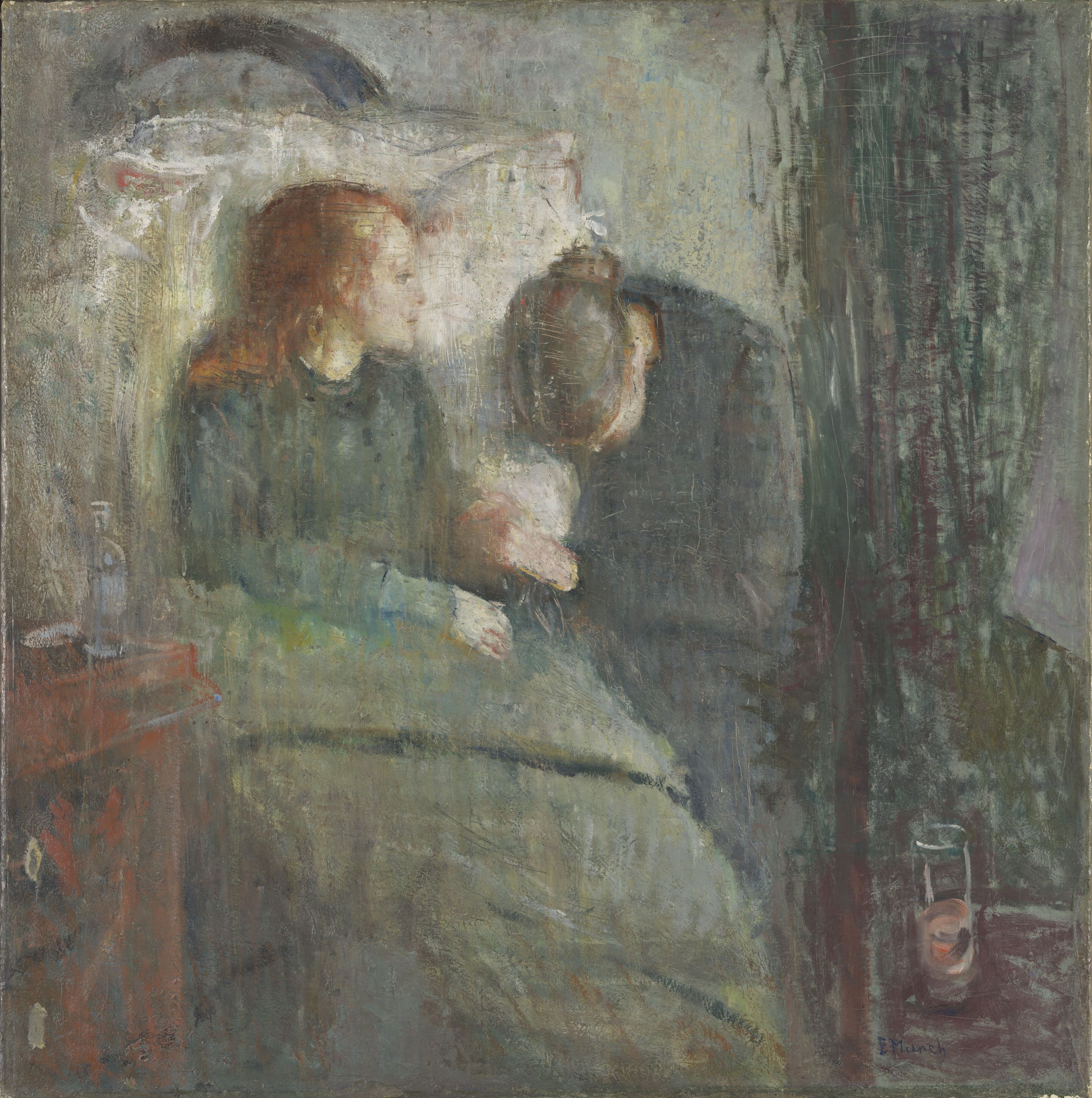
Munch · 1885 to 1886
From the editor
It does not appear on any organisation chart. It has no rota and no payroll. It is made of people who never applied for the job.
They are the daughter who moved back home, the husband who learned to give injections, the twelve year old who knows which tablets come after tea. Many of them would not call themselves carers. They would say they are only helping.
The country leans on them heavily, and it does not know who they are. When the Office for National Statistics was asked for the official number, it said it does not hold one, because carers are unregistered.
So the numbers people repeat are estimates, and some hold better than others. Two numbers turn up again and again: 10.6 million unpaid carers, and £162 billion a year that they are said to save. This issue takes those numbers apart. The people doing the work deserve figures that hold.
It also goes where the statistics rarely follow. Some carers are grieving someone who is still alive. Our Chairman, Kerl Haslam, has written about the years he spent doing exactly that, and about not having a word for it at the time. Researchers, it turns out, have more than eighteen. This company was started by people who met inside the mental health system. We are not neutral about any of this.
Every figure here is sourced, dated and named. Where a number could not be traced to the body that published it, it is not here, and the last page says what was left out.
What this issue is not. It is not an argument that caring is only a burden. It is an argument that the country should know who its carers are and what caring costs them.
01 · The count
Ask how many unpaid carers live in the United Kingdom and you will get at least four answers, each from a respectable source, each counting something slightly different.
5.0 million
People aged five and over in England and Wales who told the 2021 census they give unpaid care: 9.0 per cent, down from 11.4 per cent in 2011. About 4.7 million in England and 310,000 in Wales. The statisticians warn that the question was worded differently in 2021, and that the census was taken in a pandemic.
Office for National Statistics, Unpaid care, England and Wales: Census 2021, 19 January 2023. Unpaid care by age, sex and deprivation, England and Wales: Census 2021, 13 February 2023.
That fall looks like good news and is not. It came entirely from people giving 19 hours of care a week or fewer, whose share fell from 7.2 to 4.4 per cent. Heavy caring went the other way. The share caring 20 to 49 hours a week rose from 1.5 to 1.9 per cent, and the share caring 50 hours or more rose from 2.7 to 2.8 per cent.
1.5 million
People in England and Wales caring for 50 hours or more every week in 2021. Fifty hours is longer than a full time job, and there is often nobody to hand it over to at the end of a shift.
Office for National Statistics, Unpaid care, England and Wales: Census 2021, 19 January 2023.
627,700
Unpaid carers counted by Scotland's census in 2022, up 27.5 per cent since 2011. Scotland kept a question worded like the old one, and its count rose. England and Wales changed the wording, and theirs fell. The statisticians say the new wording may have played a part, alongside the pandemic.
National Records of Scotland, Scotland's Census 2022: Health, disability and unpaid care, 3 October 2024.
Northern Ireland counted 222,200, one person in eight aged five and over, and the number caring 50 hours or more a week rose from 56,300 to 68,700. Put the three censuses side by side and the United Kingdom has about 5.8 million unpaid carers, though that total joins two census years, two different questions and two age floors.
5.7 million
Informal carers in the United Kingdom in 2024 to 2025, eight per cent of people, in the government's own household survey: 3.4 million females and 2.3 million males, children included. It is the one official survey count for the whole country, and it lands beside the census, well short of the poll figure.
Department for Work and Pensions, Family Resources Survey: financial year 2024 to 2025, 26 March 2026.
Asked for the official number of unpaid carers in the United Kingdom, the Office for National Statistics replied: “We do not hold an official number of unpaid carers as they are unregistered.”
The state's own survey of carers in England covers only adult carers known to their council. In 2025 to 2026 the survey's population was 311,660. The census counted about 4.7 million carers in England.
Even the councils' own count was dropped for the latest year. The last official figure for carers supported, assessed or reviewed by councils in England is 360,815, for 2023 to 2024. The statistics for the following year left carers out, because the councils' new returns counted far fewer of them than the old ones had.
02 · The price
The two famous numbers come from different places, different years and different methods, and neither was built to sit beside the other.
10.6 million
The 10.6 million figure comes from a poll. YouGov asked 4,317 adults across the UK in spring 2022 whether they were caring. One in five said yes, and the charity scaled that up to the adult population. Its later Carers Week reports put the figure at 7 million in 2024, 11.9 million in 2025 and 11.6 million in 2026, and the charity says a change of wording may have lowered the 2024 result.
Carers UK, Carers Week 2022 report, Make Caring Visible, Valued and Supported, YouGov fieldwork 29 April to 4 May 2022. Carers Week reports 2025 and 2026, Opinium polling.
A poll asks a different question from a census, and this series of polls has always found more carers than the census does.
£162 billion
What the care given in England and Wales in 2021 would cost to replace, pricing every hour at £25, the official cost of an hour of home care. It covers England and Wales only, and it was calculated on the census count of 4,989,020 carers, not on 10.6 million. In the same report, a different assumption about the longest hours of care lifts it to more than £231 billion.
Petrillo, M. and Bennett, M.R., Valuing Carers 2021: England and Wales, Centre for Care, University of Sheffield, published by Carers UK, May 2023.
Put side by side, the two numbers join a poll of the United Kingdom to a valuation of England and Wales, and hang the money on a count it was never calculated from. The same research team has since produced a figure for the whole United Kingdom.
£184.3 billion
The same replacement cost method across all four nations, using the censuses of 2021 and 2022: England and Wales £162.6 billion, Scotland £15.9 billion, Northern Ireland £5.8 billion.
Petrillo, M., Zhang, J. and Bennett, M.R., Valuing Carers 2021/2022: the value of unpaid care in the UK, Centre for Care, published by Carers UK, November 2024.
Then there is the word save. The report itself uses it. But a replacement cost is not a saving. It assumes every hour of care would otherwise be bought at the going rate, which is not how families or councils behave. The authors call their figures conservative, and write that their estimates cannot put a true value on unpaid care, which in many ways is priceless. It is best read as a price tag on work that is never invoiced.
About 5.8 million people across the United Kingdom told their census that they give unpaid care. Replacing that care would cost an estimated £184.3 billion a year at the price of home care, and £162 billion in England and Wales alone.
Every number in that paragraph can be traced to the body that published it. None of them is a saving, and none of them is 10.6 million.
It is best read as a price tag on work that is never invoiced.
03 · The toll
Every two years the government asks the carers its councils know about what caring has done to them. The answers barely move.
79.4 per cent
Carers in England who said that in the last year caring had left them feeling tired. 67.1 per cent had disturbed sleep, 64.8 per cent a general feeling of stress, and 46.7 per cent said it had left them feeling depressed. One in four had developed health conditions of their own.
Department of Health and Social Care, Survey of adult carers in England 2025 to 2026, published 24 September 2026. Carers aged 18 and over known to their council; 43,460 responses.
Two years earlier the figures were almost the same: tired 79.2 per cent, depressed 47.2 per cent. A survey that returns almost the same answers every edition is not reporting a crisis. It is describing a condition.
34.7 per cent
Carers in the same survey who spend 100 hours or more a week looking after the person they care for. There are 168 hours in a week. 18.4 per cent said they have little social contact and feel socially isolated.
Department of Health and Social Care, Survey of adult carers in England 2025 to 2026, published 24 September 2026.
6.8 out of 12
The quality of life score of carers in England looking after someone with a terminal illness. Across all carers in the survey the score is 7.3.
Department of Health and Social Care, Survey of adult carers in England 2025 to 2026: quality of life scores, published 24 September 2026.
The census points the same way. In England, 27.5 per cent of carers are disabled themselves, against 17.8 per cent of people who give no care. Among those caring for 50 hours or more a week, it is more than a third.
And some of the carers are children. The census found about 120,000 carers aged five to seventeen in England and 8,200 in Wales. By our own count from the census tables, about 13,800 of the young carers in England give 50 hours of care or more every week.
Almost twice as likely
Young carers in England, compared with pupils who are not young carers, to be persistently absent from school. Their overall absence rate is more than one and a half times as high. Schools identified 89,800 pupils as young carers in 2025/26, and 56 per cent of schools recorded none at all.
Department for Education, Pupil absence in schools in England: academic year 2024/25, 26 March 2026. Schools, pupils and their characteristics: academic year 2025/26, 4 June 2026.
Only carers their council already knows: about one in fifteen of the carers the census found in England, by our arithmetic. Over a third of them care for 100 hours a week or more. The survey records what caring does to the carers the system can see.
A survey that returns almost the same answers every edition is not reporting a crisis. It is describing a condition.
04 · The penny
In England and Wales, Carer's Allowance is the main benefit for people who care. It asks for at least 35 hours of care a week, and it pays £86.45 a week.
That is at most £2.47 an hour, by our arithmetic. It also comes with a rule. A carer may work, but only up to an earnings limit, now £204 a week after tax, National Insurance and expenses. Go over it and the allowance for that week is not reduced. It is gone.
One penny
What it took to lose the week. The independent review found that a carer who earned one penny over the limit had to pay back the whole weekly allowance, £83.30 at the 2025 to 2026 rate. The Department for Work and Pensions often added a £50 civil penalty on top. In the year to March 2025, 46 per cent of all the civil penalties it issued went to people claiming Carer's Allowance.
Liz Sayce, Independent Review of Carer's Allowance Overpayments, report dated 21 July 2025, published by the Department for Work and Pensions on 25 November 2025.
The review was plain about whose failure this was. The high rate of these overpayments, it found, had been “caused not by widespread individual error by carers in reporting their earnings but by systemic issues preventing them from fulfilling their responsibility to report.”
£250 million
Carer's Allowance overpayment debt in 2023 to 2024, up from £150 million in 2018 to 2019. The number of people carrying that debt rose every year, from 80,169 to 136,730. Between 2019 and 2024, one in five Carer's Allowance claimants who combined caring with paid work had an earnings overpayment detected.
Liz Sayce, Independent Review of Carer's Allowance Overpayments, published 25 November 2025.
One carer put it to the review more simply: “It's like playing a game where only the other side knows the rules.”
38 of 40
The review's recommendations the government accepted or partly accepted. Over 200,000 cases are being looked at again, and around 25,000 carers may see debts reduced, cancelled or refunded. The cliff edge itself stays for now. In the government's words: “Others such as introducing an earnings taper will take time.”
Department for Work and Pensions, Government Response to the Independent Review of Carer's Allowance Overpayments, 25 November 2025. Unpaid carers impacted by unclear guidance to have debts cancelled, 13 April 2026.
There is a quieter figure in the same statistics. Of the 1.4 million people entitled to Carer's Allowance in the Department's figures for March 2026, 380,000 received no payment of it at all, because another benefit they already had equalled or exceeded it. Entitled on paper, in other words, but paid none of it. For those on Pension Credit the entitlement is still worth something: GOV.UK says their payments go up.
Go over it and the allowance for that week is not reduced. It is gone.
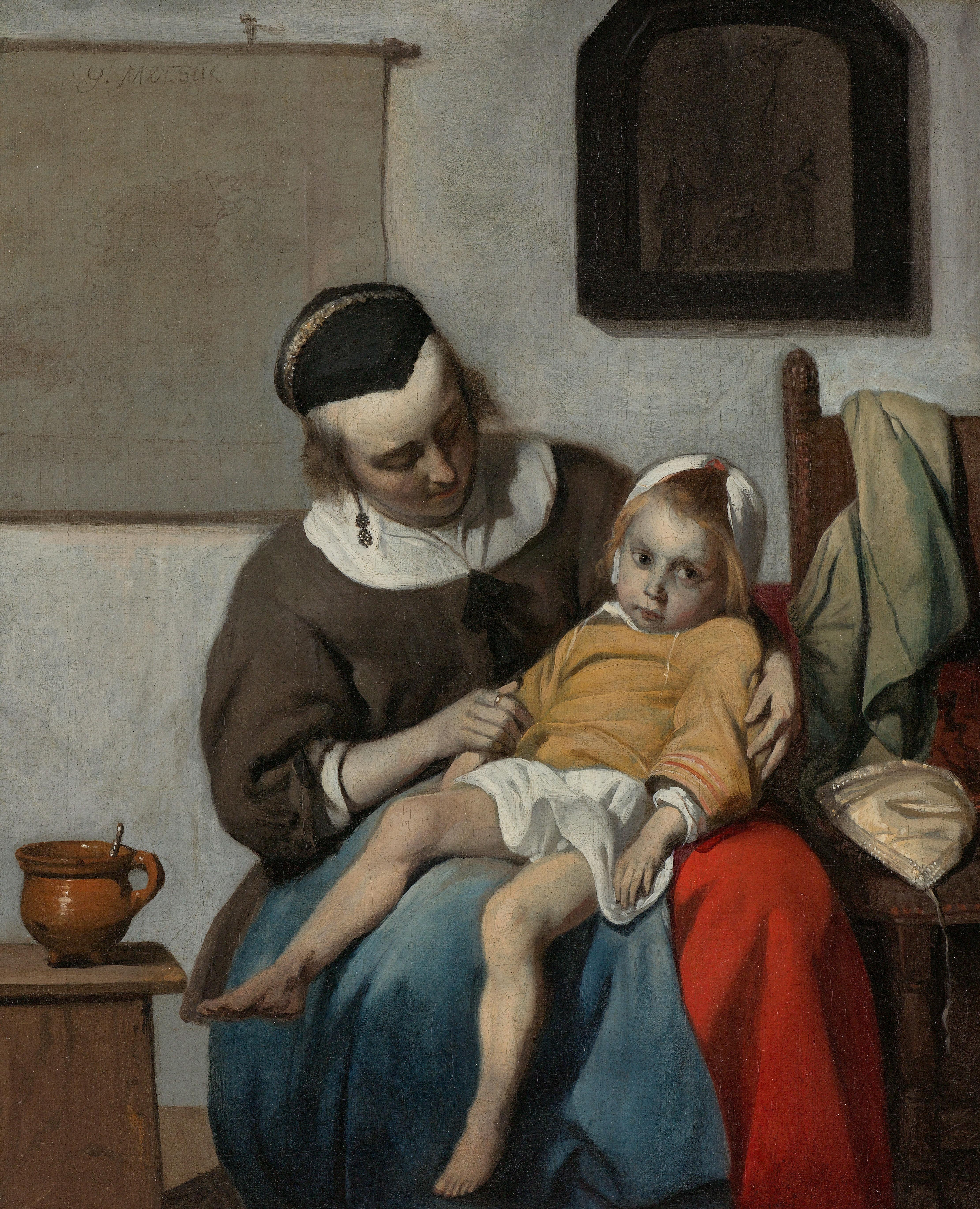
“Men will even give their lives if only the ordeal does not last long but is soon over, with all looking on and applauding as though on the stage. But active love is labour and fortitude, and for some people too, perhaps, a complete science.”
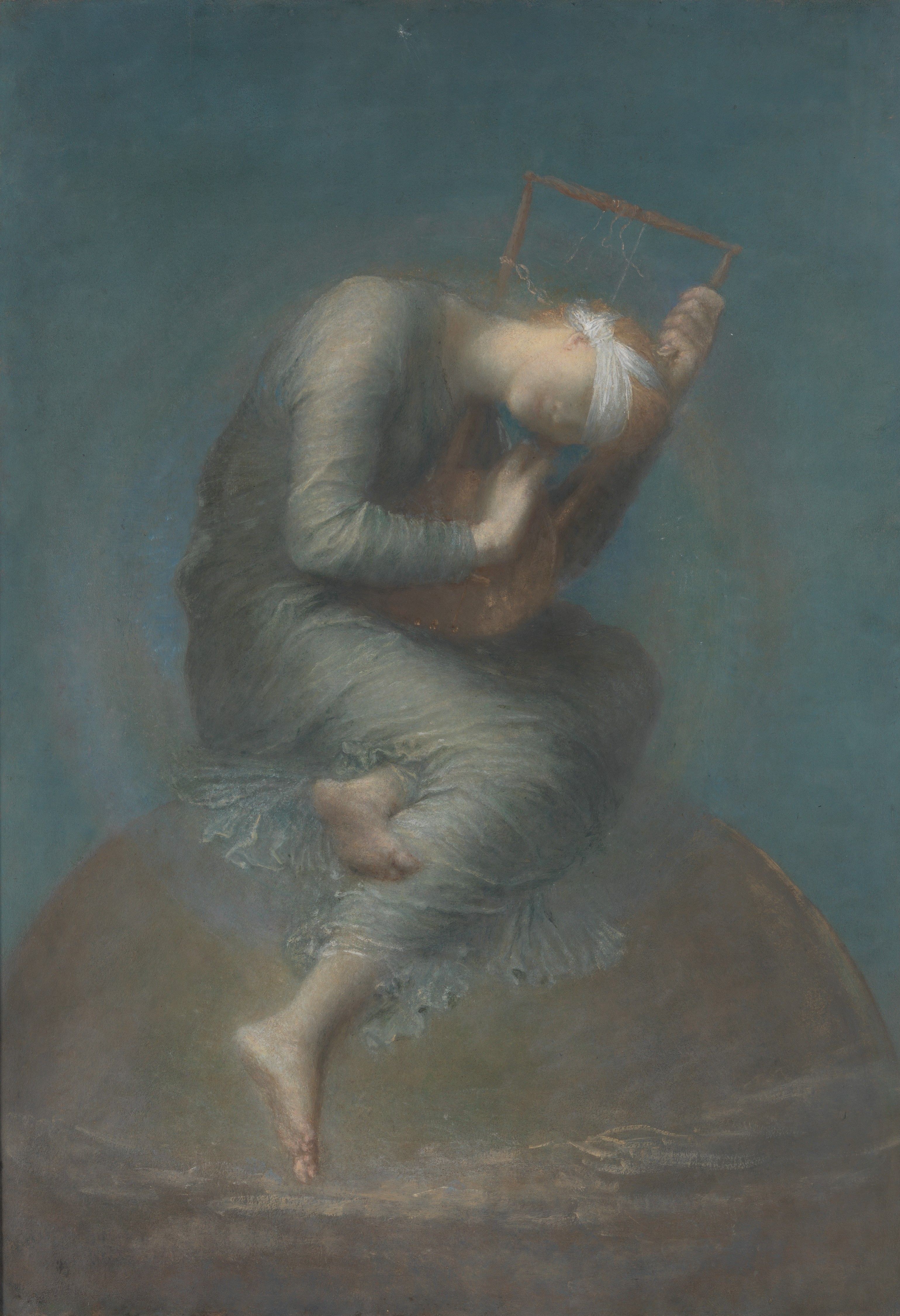
“When one has one's wherefore of life, one gets along with almost every how.”
The funnel
Read it as a row of doors, not a single queue: the years, and in places the nations, differ.
05 · Before the loss
Some carers are grieving a person who is still in the next room.
Tolstoy wrote about the watch in 1886. In The Death of Iván Ilých, a household tells a dying man he is only ill, and nothing torments him more than the lie. The one person who does not lie is Gerásim, the servant who holds his master's legs, sometimes all night long. When Iván Ilých tries to send him away, Gerásim says: “We shall all of us die, so why should I grudge a little trouble?”
The grief in the next room has a name, or several. The most common is anticipatory grief: grief that begins before an expected loss. Kerl Haslam's guide, below, describes it arriving as fear, anger, exhaustion or numbness, alongside ordinary life: laughter at the kitchen table one moment, fear the next.
Kerl Haslam lived inside it without a name for it. In January 2016 his wife was given about six months to live. She lived for nearly five years after that, and they learned to plan their lives six months at a time. He has written about those years in a short guide, The Grief I Didn't See Coming, free at thethresholdcollective.co.uk/anticipatory-grief, where it asks for an email address. One sentence from it:
“I did not realise that I was already grieving.”
More than 18 terms
What a systematic review found when it looked at how research describes family members' grief before a death: more than 18 terms and 30 definitions, and in many studies the same term, anticipatory grief among them, defined differently. If the researchers cannot agree what to call it, a carer can be forgiven for not recognising it.
Singer, J. et al., An examination and proposed definitions of family members' grief prior to the death of individuals with a life-limiting illness: A systematic review, Palliative Medicine 36(4), 2022.
Not confirmed
The comforting idea, often repeated, that grieving before the loss eases bereavement afterwards. Two systematic reviews point the other way: high grief before the death, and feeling unprepared for it, went with worse bereavement afterwards, including prolonged grief and depressive symptoms.
Nielsen, M.K. et al., Clinical Psychology Review 44, 2016. Treml, J. et al., Social Science and Medicine 284, 2021.
74.7 per cent
Bereaved relatives in England and Wales who had been caring for the person in their last three months of life. Almost one in six of all the relatives surveyed had scores indicating disturbed grief, and three in four of those had not accessed any bereavement support.
Johansson, T. et al., Better End of Life 2024: Time to care, King's College London Cicely Saunders Institute, Hull York Medical School and the University of Cambridge, funded by Marie Curie, September 2024. 1,179 relatives, surveyed six to ten months after the death.
The watching starts long before the death, and for some carers so does the grief. The systems around them are built to notice the death, and barely the years before it.
The government's carers plan for England, published in July 2026, sets out 42 actions. Its text does not once use the words bereavement, grief, end of life, palliative, dying, death, hospice or terminal. Wales has had a national framework for bereavement care since 2021, and it names grief before a death outright: “a grief reaction before someone dies sometimes referred to as anticipatory grief”. We found no national framework for adult bereavement care in England.
06 · What can be asked for
Rights are easy to miss when nobody mentions them. These four a carer can use, starting tomorrow morning. The last two are not rights, and are worth asking for anyway.
George Eliot ended Middlemarch with a sentence that could have been written for every carer in these pages: “…for the growing good of the world is partly dependent on unhistoric acts; and that things are not so ill with you and me as they might have been, is half owing to the number who lived faithfully a hidden life, and rest in unvisited tombs.”
The country will go on relying on its carers whatever it decides about them. The least it can do is count them properly, pay them without traps, and notice when they begin to grieve.
These lines are open now. They are free, they are answered by people, and you do not have to be in danger to use one. Carers can use them too, for themselves, on the worst night or an ordinary one.